
Frequency converter-
Service that inspires!
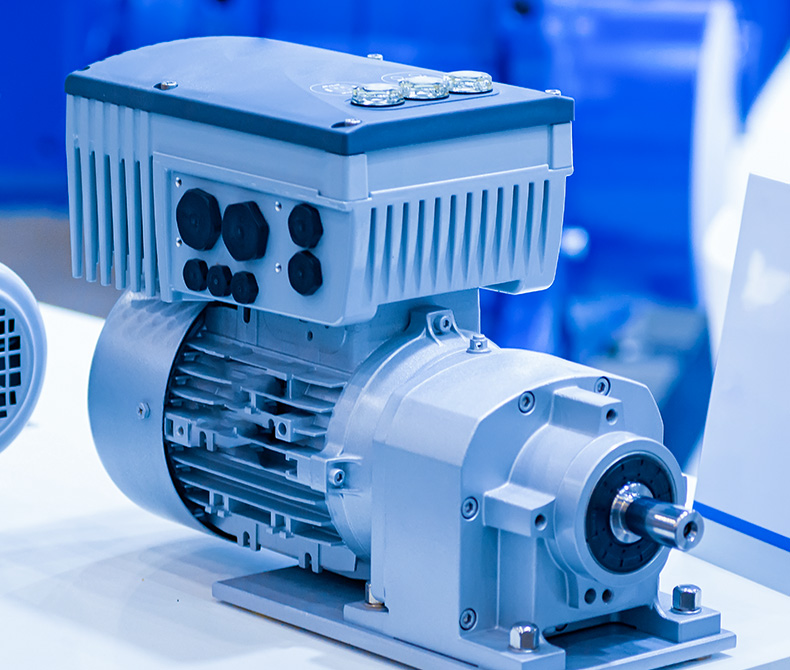
Frequency converter-Service that inspires!
Our services at a glance:
- Service for the following manufacturers: Siemens, ABB, Loher (other manufacturers on request)
- Emergency/fault service - fully equipped service vehicles with spare parts and high-quality measurement technology available
- Periodic maintenance or cleaning of equipment and replacement of wear parts
- Stocking of spare parts and new equipment (400 V, 500 V, 690 V)
- Provision of replacement equipment for the duration of repairs
- Control and fault detection in case of problematic operation
- Electrolytic capacitor replacement
- Adjustment work including checking of parameter settings, of the higher-level safety circuit and test run
- Modernization of variable speed drive systems
- Design, planning and commissioning of new drive units
- Production and assembly of customer-specific circuit variants or integration into existing control systems and regulations
Important questions about service and modernization of frequency converters
What signs can indicate age-related problems in a frequency converter?
Recurring malfunctions, unstable control behavior, elevated temperatures, or unusual fan and DC link components can indicate aging. Contaminated cooling paths and aged electrolytic capacitors also increase the risk of failure. We combine fault history, visual inspection, measured values, and operating conditions before replacing components. This way, we avoid treating symptoms without identifying the actual cause.
When is a retrofit more economical than repairing a frequency converter?
A retrofit becomes worthwhile when key components or spare parts are no longer available, malfunctions recur, or the existing technology no longer meets future requirements. In addition to equipment costs, we also consider modifications to the motor, control system, safety circuitry, and communication. Equally important are the risk of downtime, spare parts availability, and the expected remaining service life of the system. Only this comprehensive comparison allows for a sound decision.
What data do we need to replace a frequency converter that is no longer available?
For the design, we require at least the nameplate and motor data, mains voltage, power, operating mode, and existing setpoint specifications. Additionally, information on inputs and outputs, communication, safety functions, braking, installation situation, and higher-level control is important. Based on this information, we will determine which technical replacement solution is compatible and what adjustments are necessary for commissioning.
What does preventive maintenance of a frequency converter entail?
Depending on the device and operating environment, we inspect components such as cooling paths, fans, connections, capacitors, fault memory, and relevant parameters. We also consider contamination, ambient temperature, control cabinet ventilation, and safety circuitry. Maintenance intervals are determined by age, load, and environmental conditions. The goal is to identify wear and thermal risks before they cause a malfunction.
How can downtime be reduced in the event of a frequency converter malfunction?
A rapid diagnostic assessment begins with device data, error code, parameter settings, circuit diagram, and a description of the operating state at the time of failure. We determine whether repair, replacement, or a prepared retrofit offers the fastest and most reliable solution. Confirmed parameters, compatible replacement technology, and clearly defined interfaces shorten the subsequent commissioning time.
You have questions? Perfect!
Are you planning a specific project and need individual advice? Would you like to learn more about our services? Simply fill out our form or give us a call. We look forward to hearing from you.