
Safe is safe:
Quality check for electric
motors up to 15 MW.
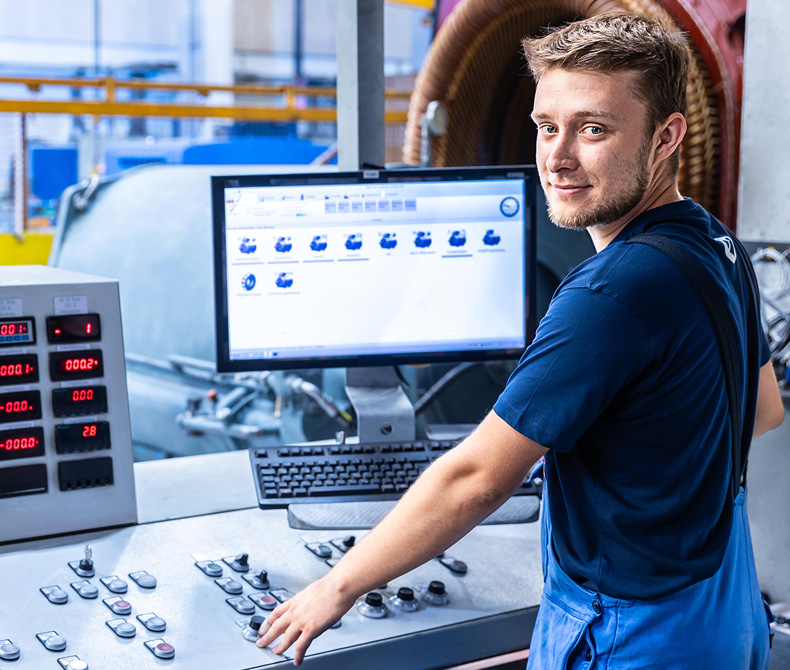
Better safe than sorry: quality check for electric motors up to 15 MW.
Our services at a glance:
- Testing of large electrical equipment weighing up to 80 t (including professional installation on 7.0 x 2.5 m grooved plate)
- High-quality test stand equipment with own oil supply for plain bearings as well as connections for water cooling
- Digital processing and documentation of all measurements (both in tabular and graphical overview)
- Carrying out the standard measurements with a frequency of 50 Hz
- Load tests up to 1,500 kW by using appropriate power converters, load generators and frequency converters (higher powers on request)
An overview of our available voltage sources:
Important questions regarding the testing of electric motors up to 15 MW
Why is the measurable engine power not identical to the available load power?
The rated power describes the machine, while the load power depends on the test setup, power supply, and available load equipment. Therefore, a large motor can be mechanically and electrically tested without each test step being performed at full rated load. We clearly define which results are measured directly and which are derived from partial tests.
How is the testing concept for a large electric motor determined?
The starting point is the scope of the repair, the design, the nominal values, the subsequent operating conditions, and the required acceptance criteria. From this, we select electrical, mechanical, thermal, and, if necessary, load tests. Technical limitations and alternative verification methods are agreed upon with the customer before testing.
Why do plain bearing oil supply and water cooling need to be included in the test planning?
Large engines often require the designated auxiliary systems or technically suitable backup power supplies for a safe test run. Oil quantity, pressure, temperature, cooling water requirements, and interfaces influence the setup and measurement conditions. A missing or unsuitable supply can distort the test or endanger the machine.
What information do we need before delivering a large engine to the test field?
We require information on dimensions, weight, center of gravity, attachment points, shaft height, foundation or foot dimensions, and details regarding storage and cooling. Additionally, we clarify transport conditions, accessories, connection data, and any necessary auxiliary structures. This allows us to safely prepare for unloading, setup, coupling, and testing procedures.
What conclusions can be drawn if a large engine is not tested under full rated load?
Even without full rated load, defined electrical, mechanical, and thermal tests can provide important evidence. The conclusions drawn depend on which measurements are directly recorded, under which conditions they are taken, and which calculations are used. Limits of the transferability of the results are explicitly documented in the test concept and report.
You have questions? Perfect!
Are you planning a specific project and need individual advice? Would you like to learn more about our services? Simply fill out our form or give us a call. We look forward to hearing from you.