
Repairing a machine requires a lot of space. A machine that fits on a Euro pallet can quickly turn into a pile of individual parts spread across several pallets once it’s disassembled. This poses major challenges for a busy workshop. Often, the repair of individual components or the procurement of replacement parts takes longer than planned. Decision-making processes—whether at the customer’s site or here—can also lead to longer storage times. So where should all these components be stored until they’re needed for reassembly?
If components are stored directly in the work area due to space constraints, the distances may be short—but at the same time, work surfaces and walkways are restricted. This not only disrupts the smooth flow of work but also increases the risk of tripping hazards and makes it more difficult to work safely. In addition, workspace equipped with cranes and infrastructure is particularly limited and expensive, which is why it would be a shame to occupy these areas with pallets that sometimes remain there for several weeks.
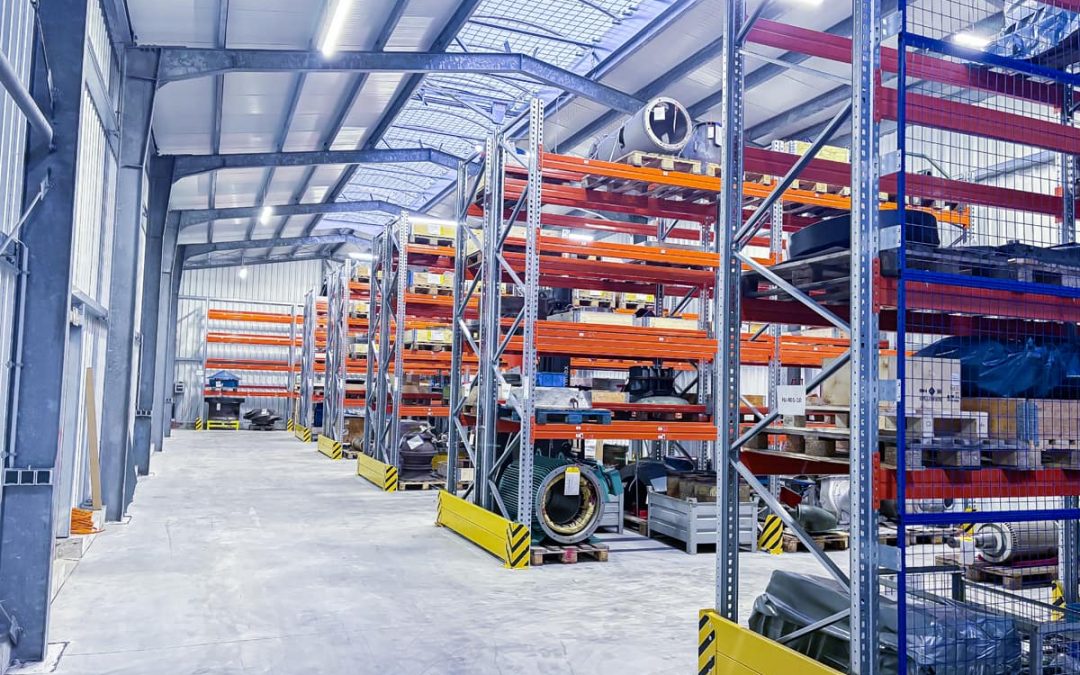
That is why we decided to optimize our internal logistics. Instead of creating additional storage space in the workshop and further expanding the existing workshop area, we identified an open space on the premises and built a warehouse there equipped with heavy-duty pallet racks.
The facility now accommodates over 450 pallets of components, which are stored safely and securely while repairs are underway. In addition, we have expanded our internal order-processing software to include a logistics tool that allows us to organize and track pallet movements at any time. The resulting increase in workshop space has already contributed significantly to improving our internal processes. As a next step, we plan to further digitize the storage process by assigning each component its own NFC chip, which automatically reports its location to the system.